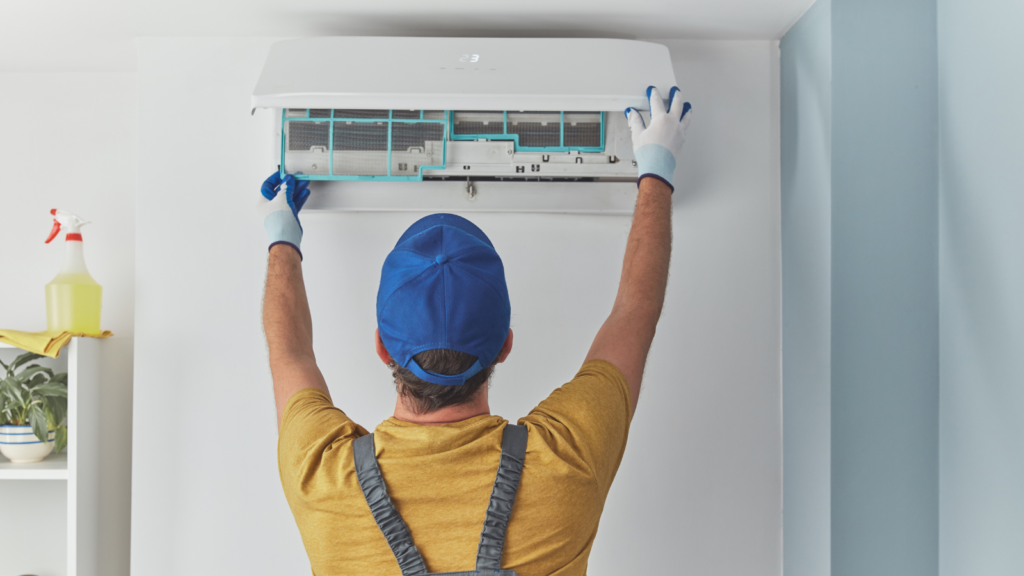
A ductless mini split is a good fit for room additions, garages, sunrooms, bonus rooms, older homes without ductwork, and any room that never matches the rest of the house. It is a weaker fit if your existing ducts are in good shape and you want whole-home comfort at the lowest upfront cost. Ductless mini split installation is less invasive than adding ducts, but sizing and placement decide how well the system works.
If you are researching ductless mini split installation and comparing what a Bentonville HVAC contractor should do, here is what to know before you buy.
What a Ductless Mini Split Is
A mini split is a heat pump with two main parts: an outdoor unit and one or more indoor air handlers. A conduit carrying refrigerant tubing, power, and a condensate drain connects them, so there is no ductwork. According to the U.S. Department of Energy, many models support up to four indoor units on one outdoor unit, and each zone gets its own thermostat. That lets you heat and cool only the rooms you use.
Because it is a heat pump, a mini split handles both seasons. It cools in summer and heats in winter with the same equipment.
When a Mini Split Makes Sense
The Department of Energy calls mini splits an excellent option for homes that heat with non-ducted systems like baseboard or radiant heat, and for room additions where extending ductwork is not practical. They also suit garages, workshops, and finished attics that the main system struggles to reach.
Efficiency is another reason. The Department of Energy notes that duct losses can account for more than 30 percent of energy use for space conditioning, especially when ducts run through an attic. A mini split avoids those losses. The agency also says ductless models can reach efficiency ratings up to 35 SEER2, compared with up to 25 SEER2 for ducted heat pumps.
Ductless or Ducted?
Ductless is not always the better answer. If your home has ducts in good condition and you need to condition most of the house, a ducted system may cost less upfront. If the real problem is uneven comfort from ducted equipment, improving ductwork and zoning can solve it without adding a second system. The Department of Energy also lists higher installation cost as the main disadvantage of mini splits, though lower operating costs and incentives can offset it over time.
A good contractor helps you weigh these tradeoffs and does not push one system for every home.
Will It Heat Through Northwest Arkansas Winters?
Modern mini splits heat well in cold weather, but performance drops as outdoor temperatures fall, and models vary. Look for the rated heating capacity at low outdoor temperatures, which manufacturers publish. If a mini split will be the only heat in a room, choose a model that holds its output during local freezes, and ask about backup heat for the coldest nights.
Sizing and Placement Matter Most
Every indoor unit needs to be sized for its room, not for the whole house. The Department of Energy warns that oversized or badly placed air handlers often short cycle, which wastes energy and gives poor temperature and humidity control. A proper installer measures each space, accounts for windows, insulation, and sun exposure, and performs a load calculation rather than guessing.
Placement affects comfort as much as size. Indoor units work best where air can move across the room, away from furniture blocking the airflow and away from direct sun on the sensor. The outdoor unit can sit up to 50 feet from the indoor unit, so you have room to choose a spot that is quiet and out of the way. Avoid placing it under a bedroom window.
Choosing the Indoor Unit Style
Wall-mounted units are the most common and the simplest to install. Ceiling cassettes sit flush in a drop ceiling and suit rooms where wall space is limited. Floor-standing models work well under windows or where walls are hard to use. Pick the style that fits the room and how you want it to look, since the indoor unit stays visible.
What Ductless Mini Split Installation Involves
A proper job starts with a site assessment and load calculation. The installer mounts the outdoor unit on a pad or bracket, drills a small hole, usually about three inches, through the wall, and runs the conduit. The indoor unit is mounted and connected, the refrigerant lines are pressure tested and evacuated, and the electrical work is completed. It should finish with a full test of airflow, temperature, drainage, and controls, so ask for it. Hire a licensed and insured contractor who pulls the required permits, and read the warranty, since manufacturers often require professional installation and documented maintenance.
You can also read about heat pump and cooling services for background on how these systems are serviced.
Questions to Ask Before You Sign
Ask whether the contractor will size each room separately. Ask for the model’s low-temperature heating rating. Ask who handles the electrical work and permits, how condensate will drain, and what the warranty covers. The Department of Energy recommends choosing an ENERGY STAR certified unit and hiring an experienced installer, and it notes that qualified installers can be hard to find, so ask how many ductless systems they have installed. Check for utility rebates before you buy, since programs change.
Keep It Running Well
Clean or rinse the indoor filters on the schedule in your manual, keep the outdoor unit clear of leaves and debris, and schedule a yearly professional check.
Ready to Talk Options?
If you are weighing a ductless system and want a Bentonville HVAC team to talk through your home, call 479-936-4932 or email pdhvacllc@gmail.com. We are available Monday through Friday, 8:00 to 5:00.
The right mini split is the one sized for the room, placed well, and installed by someone who has done it before.